Edit the row, not every seat.
Change row count, spacing, curve or one odd seat at any time. A new seating plan takes minutes, not a redraw.
SeatLayer is ticketing software for theaters and performing arts centers. Draw the auditorium once, then sell every performance on your own website, at the box office and at the door from one live seat map. Your brand and your payment account, with QR tickets, refunds and door check-in included.
$0.50 per confirmed ticket, and nothing until a ticket is confirmed. No subscription, no percentage of the ticket price.
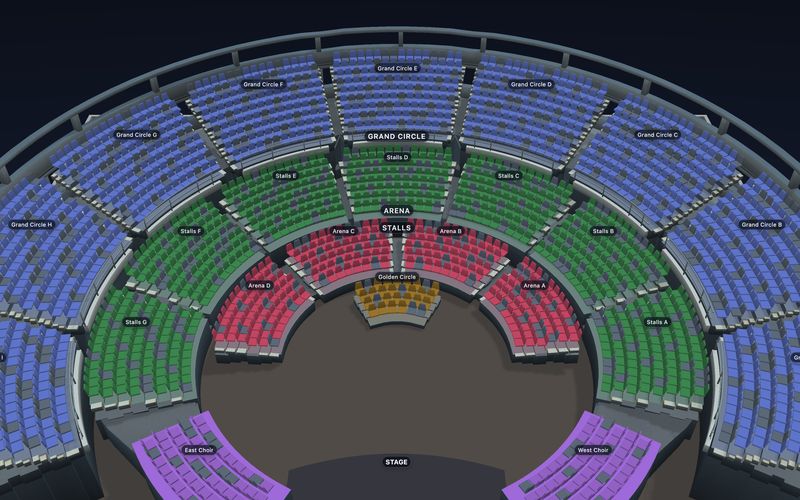
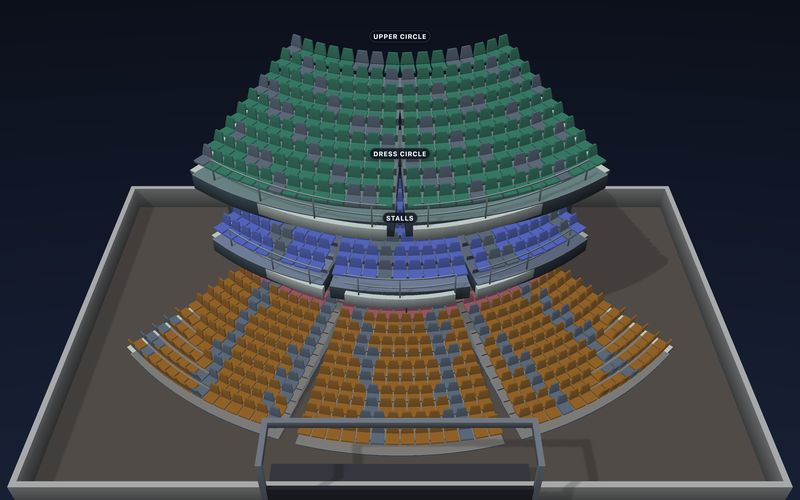
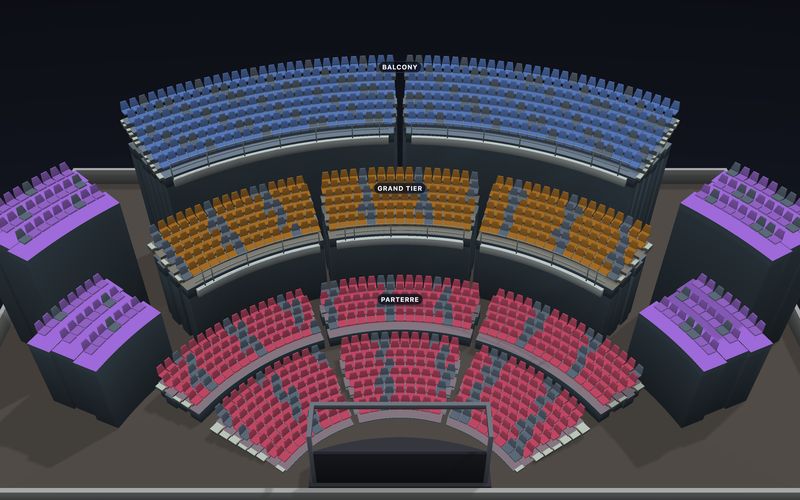
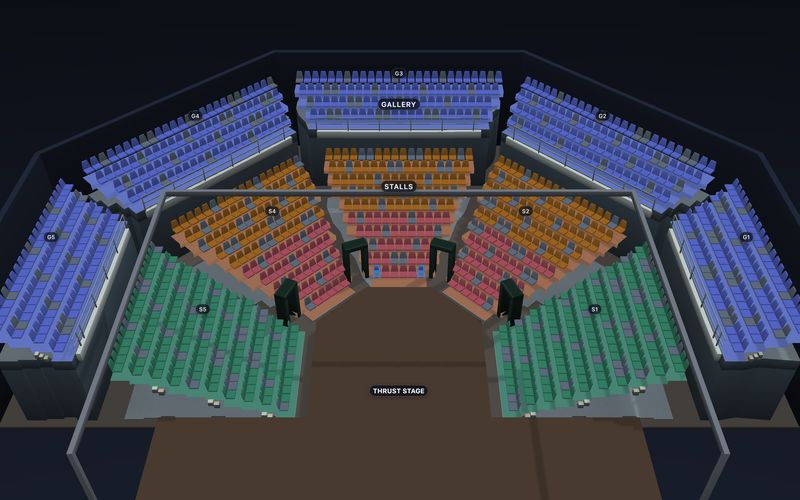
See the full pricing page →Curved stalls, a raked circle, boxes and a choir live in one plan. Draw it once and every performance uses it.
Change row count, spacing, curve or one odd seat at any time. A new seating plan takes minutes, not a redraw.
Stalls, circle and balcony sit at the heights you set, so the 3D view and seat views match the real room.
Sections point at the stage, so best-seat suggestions and the view from a side box or rear balcony come out right.
The wheelchair space, the pillar, the side box that sees three quarters of the stage. Buyers see it before they pay.
Wheelchair, companion, hearing, sign-language and plus-size seats can be filtered and show on the confirmation.
Empty wheelchair spaces stay sellable inventory, not skipped positions.
Restricted-view seats carry their own label, and buyers can hide them.
A label passes on what your venue recorded; it is not a sightline guarantee.
Access labels sit apart from price categories, so a wheelchair space never implies a discount you did not set.
Prices are re-checked on our server before payment is taken.
Optional 3D, never required. Buyers can open the house in 3D and look from a seat. It loads only when asked, and every browser keeps the full 2D map and checkout. Treat 3D as orientation, not a sightline or accessible-route guarantee.
Your photos first, a preview otherwise. SeatLayer shows the closest photo you uploaded, or draws a view from the plan. Buyers can tell your photo from the live 3D view.
One live seat map for the website, the box office window and the door.
Checkout on your own site, and a counter that suggests the best seats for walk-ups.
Email the tickets or print them on an 80 mm roll or A4. Find any order and refund all or part.
Hold press and production seats, release them late, scan at the door and read the night's totals.
The counter records how you were paid (cash, your own card machine, bank transfer or a comp) and applies discount presets you set. It never charges a card itself.
See how the box office software works →Most theatre ticketing software is a suite with a CRM and fundraising, priced on request. SeatLayer does the seating, the sale, the box office and the door, at a public price. Read from each vendor's own website on 18 September 2026.
| Question | VBO Tickets | AudienceView | On The Stage | SeatLayer |
|---|---|---|---|---|
| How you pay | Quote on request: flat fee, per ticket or a mix. | Per ticket with a minimum, or an annual subscription. No figures published. | A variable fee, usually passed on to patrons. No figures published. | $0.50 per confirmed ticket. No subscription, no percentage. |
| Sells on your own website | White-label purchase flow on the venue's own domain. | Branded ticket pages; a website suite on the top tier. | Embeddable ticket widget, plus hosted show sites. | One HTML block on WordPress, Wix or any site, or a hosted event page. |
| Included beyond ticketing | Patron CRM, fundraising, subscriptions, concessions, marketing. | CRM, fundraising, memberships, marketing, gift cards. | Patron CRM, marketing, fundraising, website builder. | None. Keep the CRM and fundraising tools you already use. |
| Reserved seating and box office | Seat map builder, holds, point of sale, scanning app. | Reserved seating charts and a box office module. | Seating chart editor, browser box office, QR scanning. | One live seat map for web, counter and door. QR tickets, refunds, check-in. |
None of the three publish a price we could verify, so compare costs with a quote. Check each row against the vendor's own page.
One account and one chart. Sell some events on SeatLayer checkout and embed the seat picker in your own system for others; each event picks its path.
SeatLayer covers reserved-seat ticketing and Fixed Renewable Seasons, not the rest of a theatre-management suite: it is not a patron CRM, membership, donor or fundraising, email-marketing, concessions, merchandise, accounting, volunteer, production-scheduling, or general-admission product.
One room, a few productions a year, no budget for a monthly bill. You pay $0.50 per confirmed ticket and nothing in a quiet month.
A small season, costed
$0.50 per confirmed ticket. No subscription, no percentage. Your gateway's processing fee is separate.
Stalls, circles and boxes in 3D, built from your theatre seating chart. Buyers jump into a seat, see the stage from there with row and seat number, and step along the row to compare before they choose.
 Sit here, live
StallsStalls D, Row F, Seat 7The stage straight ahead, the grand circle above.
Sit here, live
StallsStalls D, Row F, Seat 7The stage straight ahead, the grand circle above.
 Sit here, live
Grand circleGrand Circle E, Row B, Seat 7The whole stage from the balcony.
Sit here, live
Grand circleGrand Circle E, Row B, Seat 7The whole stage from the balcony.
 Sit here, live
Close to the stageStalls D, Row C, Seat 6Right at the stage.
Sit here, live
Close to the stageStalls D, Row C, Seat 6Right at the stage.
See every 3D feature on the 3D seat map page, or try more seats on view from seat.
Stalls, circles and boxes are already drawn. Rename the sections, set your prices and sell every seat in 2D and 3D.
Still have a question? or email hello@seatlayer.io.
Open the Grand Theatre demo to inspect the buyer flow, or build your own auditorium. The same model also covers table-led comedy club rooms and tiered arena and stadium bowls.